
Finding Lehigh County Residents
Start with the record that fits what is already known. A current street address belongs in the County Property Search; a recording number belongs with the Recorder; a historic Allentown household often belongs on a library reel. A court case number, a voter’s own identity details, or a dated vital-record clue each lead to different custodians. The useful result is not a broad name match. It is a record with a date, a location, and a clear source.
The public trail is partial by design. Assessment information can identify a parcel and recorded documents can identify parties to a transaction, but neither one is a complete list of everyone connected with an address. A missing result may reflect a different custodian, an older spelling, a protected address, a record that needs a request, or material kept only at a library or counter.
Save the URL, retrieval date, and identifier from each useful hit. Those small details make the next official request or repository visit much easier to reproduce.
- For an address, use the Property Search and preserve the returned PIN, PARNUM, and any instrument number.
- For a recorder question, follow that identifier to the document channel and read the actual instrument.
- For an old Allentown household, match the year to a city directory or newspaper reel.
- For a specific court or estate lead, confirm the county, party role, case number, and date with the court system.
- When the posted source ends, make a narrow request to the custodian rather than guessing from an incomplete result.
Lehigh County Records Offices
Three county channels form the practical center of a Lehigh County residents search. The Recorder preserves recorded land instruments. Assessment and GIS connect an address to a current parcel identifier. Voter Registration handles county election records and directs individual status questions through the Commonwealth system. Court, estate, city, archive, and library sources answer narrower questions, so an office name should always be paired with the type of record it keeps.
Recorder of Deeds Division
455 W. Hamilton St., Room 122
Allentown, PA 18101-1614
610-782-3162
Lehigh County Assessment Office
17 S. Seventh St., Room 517
Allentown, PA 18101
610-782-3038
Lehigh County Voter Registration
17 S. Seventh St.
Allentown, PA 18101-2401
610-782-3194
Recorder counter hours are Monday through Friday, 8:00 a.m. to 4:30 p.m. The Voter Registration office lists weekday hours of 8:00 a.m. to 4:00 p.m. Confirm a collection’s hours before a visit, especially when a question requires an image, a certified copy, or a staff-held volume.
Lehigh County Parcel Search Fields
The public Property Search is a precise address and document tool, not a name directory. Its single text box must be paired with a search type, and the County requires a captcha, at least four characters, and its published direction and suffix abbreviations. That small set of choices is useful because it tells a researcher exactly what the screen can, and cannot, do before a search begins.
| County field | Input | What it can lead to | Known limit |
|---|---|---|---|
| Address | Street text using County abbreviations | Parcel and assessment context | Use four or more characters and captcha |
| Parcel Identification | PIN, optionally with PARNUM | One parcel’s County identifier | Not a historic lot conversion |
| Document ID / Instrument Number | Known number | Recorder follow-up clue | Not a party-name browse |
A PIN is the County’s 12-digit parcel identifier. A PARNUM is a one-to-five-digit companion number. Preserve both when they appear. The County explicitly says an old map, block, or lot reference cannot replace the current PIN/PAR, even though the older description may still help reconcile a historical source.
Note: A parcel result is a dated property record, so retain the query date and do not treat a mailing field as proof of current residence.
Lehigh County Deed History
Lehigh County’s deed route reaches back to 1812, but access changes with the period and channel. The county describes Russell Index material for 1812 through 1983 and LANDEX/Russell-book access from 1812 to the present for Online Records Access subscribers. Book records continued through April 19, 2002; computer images began April 22, 2002. Those dates help explain why an older trail may be a book or index citation rather than a ready web image.
Use a parcel or known instrument number as the bridge. From the current instrument, the transferring party can lead to an earlier acquisition as a grantee. The document itself supplies the meaningful details: recording date, document type, grantor, grantee, legal description, prior reference, and any PIN/PARNUM shown. The County ORA service and Recorder counter are the fallback channels when the public property screen does not expose the needed material.
Free Property Search and the deeper subscription are different access routes. The County’s ORA FAQ states a $300 annual subscription, normal activation within three business days, and updates within 24 hours. Confirm current terms before using a paid channel.
Lehigh County Property Search Screen
The County’s public Property Search shows the address, PIN, and document-ID choices that begin an address-led record trail.
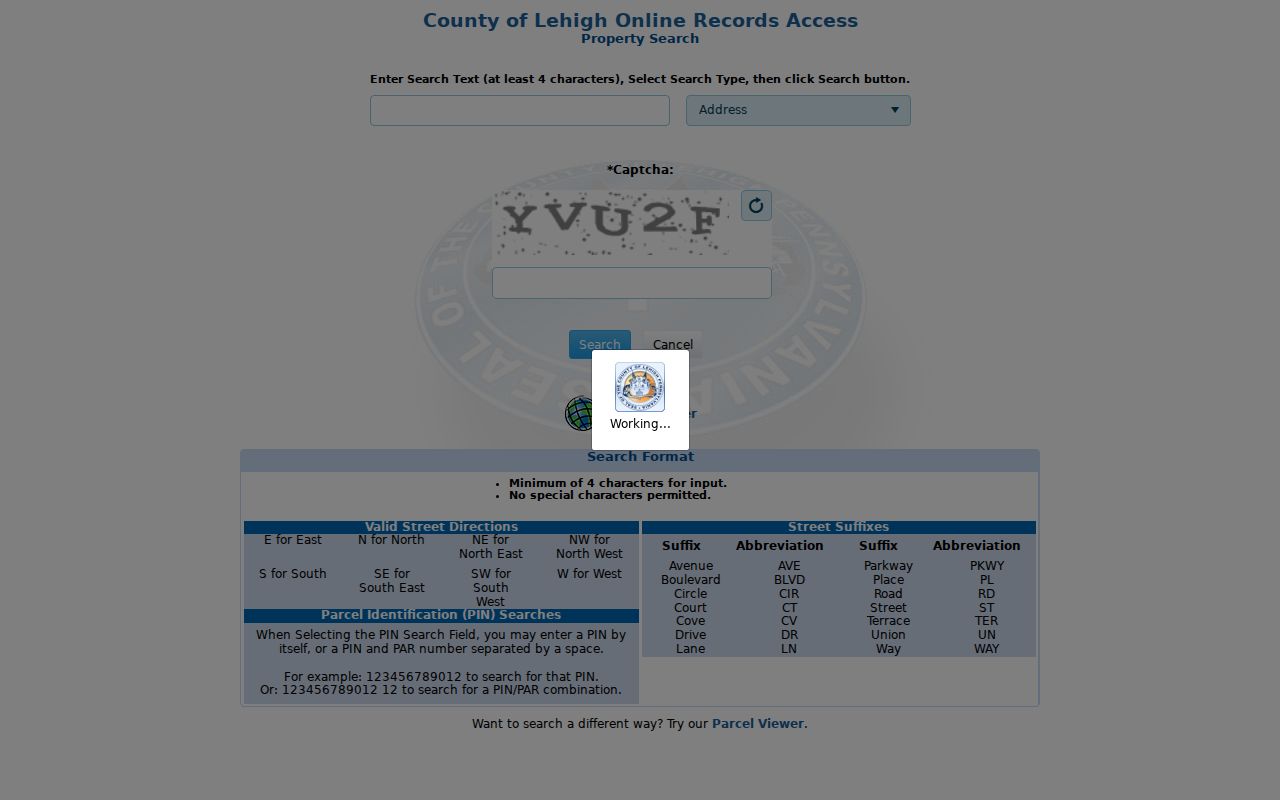
The screen’s limits matter as much as its controls. It does not expose an owner-name or ZIP-code selector in the inspected menu, so a better next step is a normalized address or known PIN, then the Parcel Viewer and Recorder route.
Pennsylvania Voter Access in Lehigh County
Pennsylvania’s Check My Registration Status path is for an individual identity match. The form calls for first name, last name, date of birth, county, and ZIP Code. It is not an open name search. The County office and the state hotline are documented alternatives when the online status route is not suitable.
Street, walking, public-information, and full voter lists are separate products under the Election Code. The state request form requires identifying information, a signature, a list type, county selection, and a use affirmation. Public lists have statutory controls, and electronic signatures and SURE registration numbers are excluded. A street list is a regulated election record, not a general resident roll.
The official state status page points a registrant toward the proper service and County contact route.
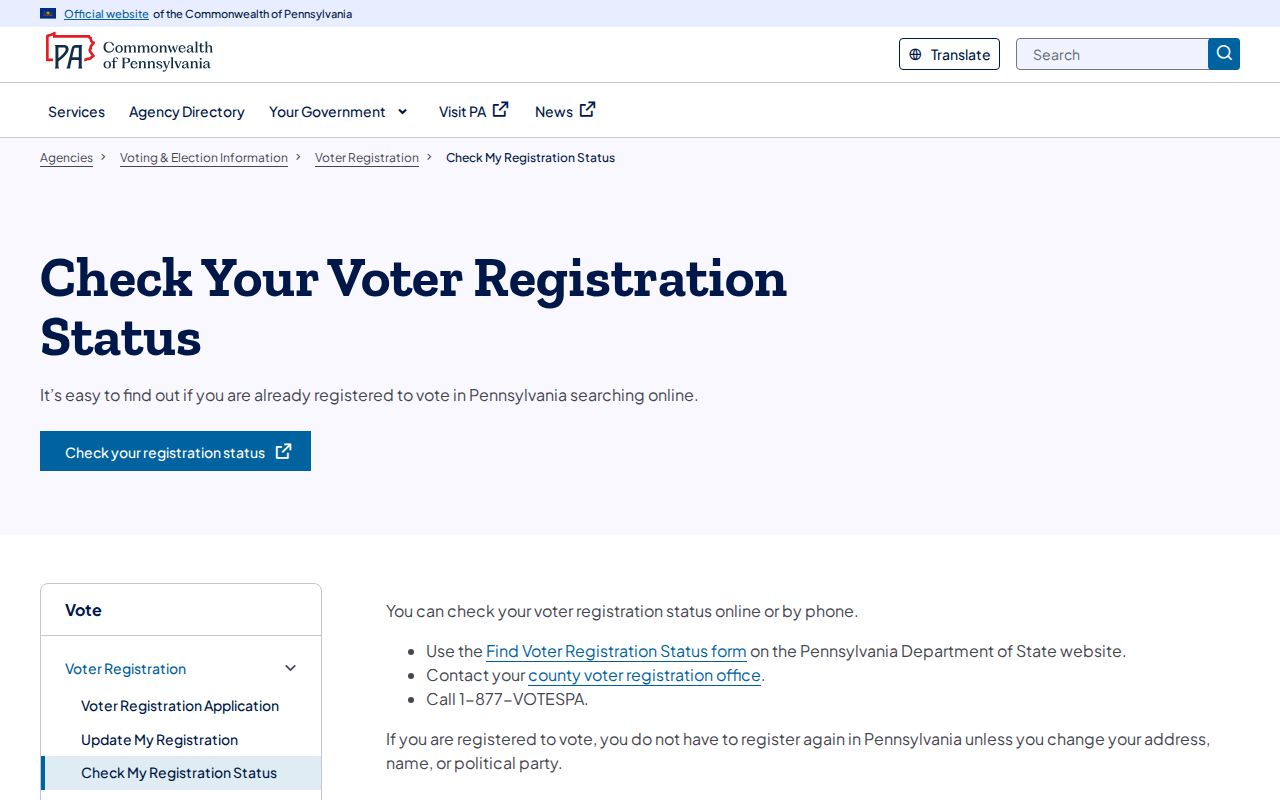
Use the result for the purpose and time it represents. County maintenance and protected-address rules mean an entry or absence should not be treated as a permanent address conclusion.
Lehigh County Court Name Checks
A court result gains value only when the county, party role, case number, and date agree. The Pennsylvania Unified Judicial System Case Search provides statewide docket access, including Lehigh County. County Odyssey materials describe civil, family, judgment, ejectment, marriage, Wills, and Orphans’ Court channels, while noting that protected or sealed categories remain unavailable.
A docket is an index of case activity, not the whole file. Capture its case number and disposition before asking the clerk for the record or a copy. Adoption and parental-termination matters are specifically outside the County’s public Odyssey description. A name alone, especially a common one, is not enough to connect a person to a case.
The UJS portal is the statewide entry point for that verification step.
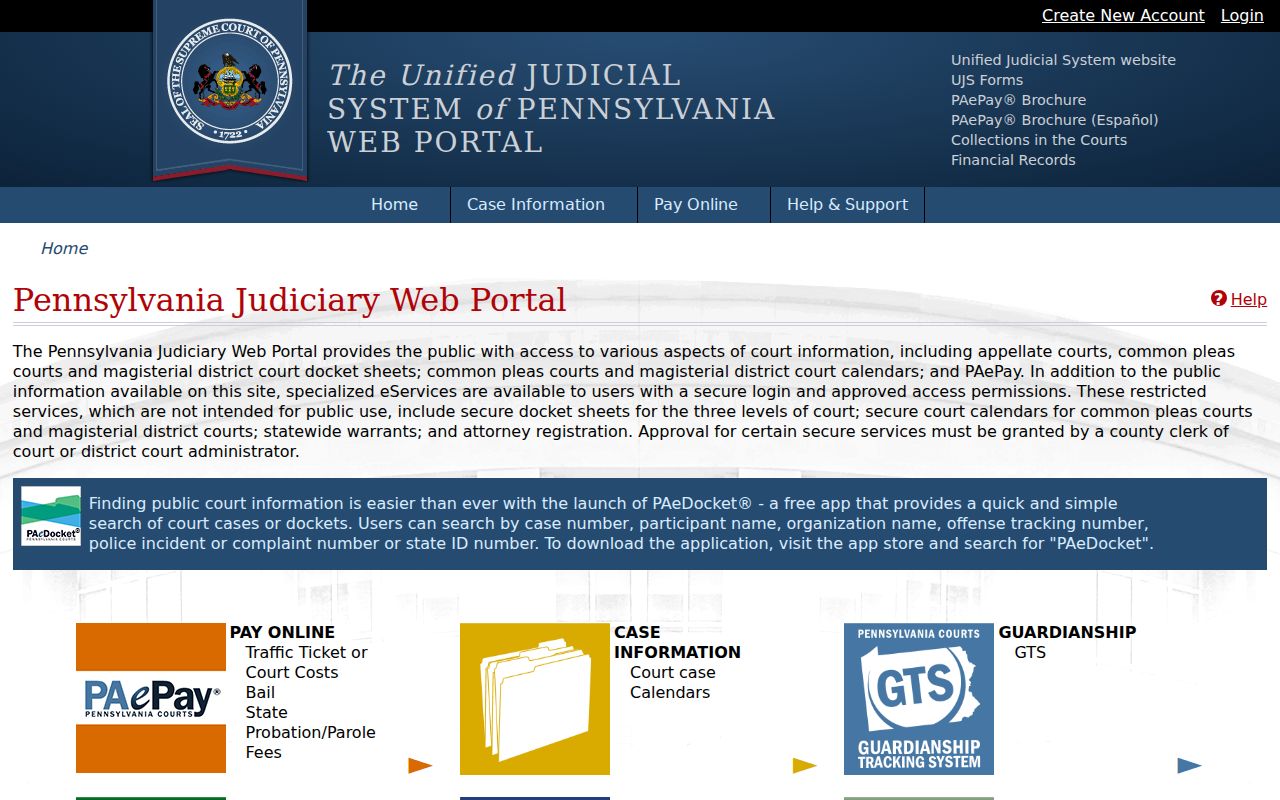
The portal provides a documented starting place; the relevant clerk is the file and copy fallback when a docket requires context.
Current Lehigh County Record Sources
There is no one official current residents directory for the County. Instead, each current source answers a limited question. A property result can connect an address and parcel; a Recorder index can identify parties to a recorded document; a court docket can confirm a case reference; and the voter system has its own identity-based or regulated-list route. The table keeps those distinctions visible.
| Lehigh County source | Best use | Custodian | Access path |
|---|---|---|---|
| Property Search and Parcel Viewer | Address, parcel, map, and assessment context | County Assessment/GIS | Public screen and map |
| Recorded-document trail | Instrument parties and legal description | Recorder of Deeds | Counter, ORA, or documented route |
| Voter status or list | Individual status or regulated election record | State and County elections | Status form, office, or signed request |
| UJS and County court channel | Docket and case reference | Courts and Clerk | Portal, then clerk file/copy route |
A commercial people-finder category may combine stale or mixed-source information, while a custodian can identify the record’s date and scope. Official sources can take more steps, but they provide the document, rule, or repository needed to check a result. Use a current source for a current question and a period source for a historical one.
For example, a property screen can provide the current County parcel context but cannot establish every person connected with the site. A Recorder image is tied to a recorded transaction, not a present household. A voter status result is limited to the identified registrant and its lawful access route. Keeping those roles separate makes the Lehigh County residents directory more useful than combining unrelated results under one name.
Lehigh County Vital Record Dates
Pennsylvania birth and death certificates from 1906 forward belong to the Division of Vital Records, not to a County name-search screen. A current certified record has eligibility and identification rules. For older research, the State Archives opens births after 105 years and deaths after 50 years. Marriage licenses stay with the county that issued them, and a divorce file belongs with the county court where the action was filed.
The Archives request route describes $5 noncertified copies for qualifying public records when the requester supplies the name, date, and certificate number. The Department’s genealogy guidance also says its Division of Vital Records does not permit self-search. These access limits make a dated index and a custodian request more reliable than a broad person search.
Note: A historical index points to a record; it does not remove the eligibility rules that apply to a newer certificate.
Historic Lehigh County Directories
For a past household, Allentown Public Library’s historical collections are a strong local starting point. Its Reference Department holds Allentown city directories from 1860 through 1980, federal census microfilm from 1800 through 1930, a Morning Call run from 1895 to the present, and an obituary index for 1895 through 1983. The index gives the newspaper appearance date and page, not the death date, so retrieve the cited issue before drawing a conclusion.
The Lehigh County Historical Society adds an Allentown directory shelf reported as 1860 to current, plus maps, church and cemetery material, estate and court compilations, and early local sources. These are dated historical leads. The detailed repository workflow, entry-reading tips, and collection differences belong on the Lehigh County city directories page.
Allentown Public Library gives the practical access channel for its directory reels: two public microfilm readers, 25-cent printing, and options to save scans as PDF, JPG, or PNG or send them by email or USB. The Historical Society’s library and archives are at 432 W. Walnut Street and list Tuesday through Thursday hours, with Friday research by appointment. A source citation should retain the reel, volume, page, or image and the year consulted.
Lehigh County Map and Directory Dates
Lehigh County’s record trail has a useful local chronology. Recorder material begins with County custody in 1812. The Historical Society holds an owner-indexed 1816 survey, an 1862 map, and a 1876 atlas. Its Sanborn holdings cover named Lehigh Valley places for 1885 through 1927, while the Lehigh University exhibit identifies Allentown Sanborn material for 1911 through 1930. Each item has a date and coverage boundary.
Use the original street wording and the year from a directory, map, newspaper, or instrument. Then compare it with the legal description and current parcel. A present mailing city or ZIP may differ from the municipality recorded in an older source. The County advises including ZIP information when a city or town name differs from the municipality, which is a reason to preserve both forms rather than silently changing the old one.
- Roll
- A list maintained for a defined public purpose, with its own access rule and date.
- Index
- A finding aid that points to a record, not always the record image itself.
- Parcel
- A mapped land unit tied to County identifiers and assessment context.
- Criss-cross directory
- A historical directory arrangement that may begin with an address rather than a surname.
Lehigh County Records Request Path
When a County administrative record is not posted, the documented fallback is a narrowly described request under the Pennsylvania Right-to-Know Law, 65 P.S. §§ 67.101-67.3104. The baseline written response period is five business days under § 67.901. Use the County’s standard form to name the record, office, approximate date, and preferred inspection or copy method.
A request seeks existing records. It does not require staff to investigate a person, create a list, or disclose material that is sealed, confidential, or otherwise exempt. For an Allentown municipal file, the City Right-to-Know Officer is a separate custodian and ordinarily states a five-business-day response, with a possible statutory extension. Direct the request to the government body that made or holds the actual record.
Note: A short record description with an address, date range, and document number is more useful than a request asking staff to solve an identity question.
Lehigh County Address Protections
The Pennsylvania Address Confidentiality Program can place a substitute address in listed court, government, voter, school, marriage-license, and related records for eligible participants. That is a safety protection, not a broken search. Voter records also omit certain data such as electronic signatures and SURE registration numbers from public list access.
Records can also be incomplete because the wrong county, municipality, or era was searched. Check the source date and custodian before asking for a correction. A County parcel screen, a library directory, and an archival index are evidence from different periods, not interchangeable statements about a person today.
Lehigh County Recording Alerts
The Recorder’s free Record Alert enrollment route can send a text or email after a verified recording, identifying the parcel number, instrument number, document type, and date. It is a prospective notice tool for a monitored parcel, not a title search or a way to establish identity. If an unexpected notice arrives, contact the Recorder and inspect the actual recorded document.
The Pennsylvania Attorney General’s February 2026 property-ownership scam warning makes that check especially practical. A mailing, screen capture, or suspicious message is not proof of a transfer. Preserve the document identifier, verify it through the official County channel, and seek appropriate assistance if the situation suggests fraud or immediate danger.